Ruby 3.2 Is EOL: What You Actually Need to Do
Ruby 3.2 hit end of life on March 31, 2026. What that actually means for your Rails app, your real risk, and why Ruby 3.4 is the target to upgrade to.
Ruby 3.2 hit end of life on March 31, 2026. What that actually means for your Rails app, your real risk, and why Ruby 3.4 is the target to upgrade to.
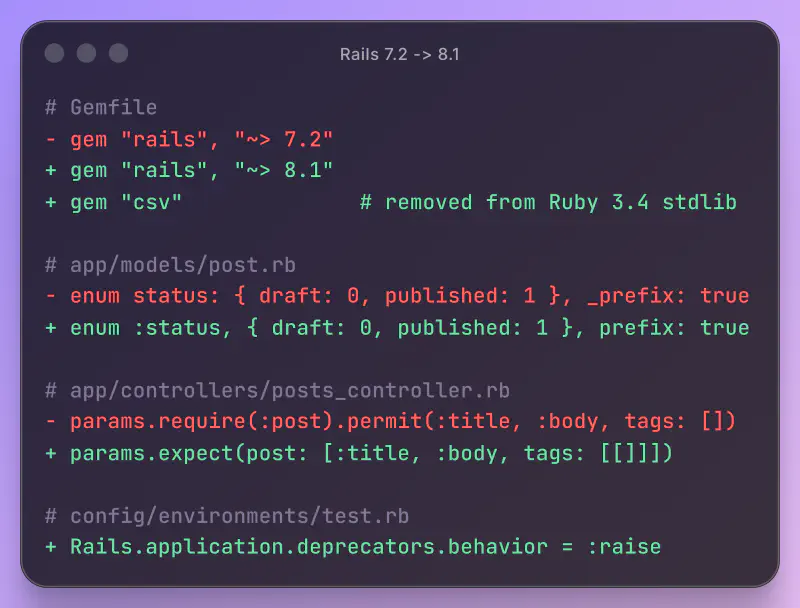
Everything that breaks upgrading Rails 7.2 to 8.1, and how to fix it: enum syntax, the Solid trifecta, Propshaft, params.expect, and every silent regression.
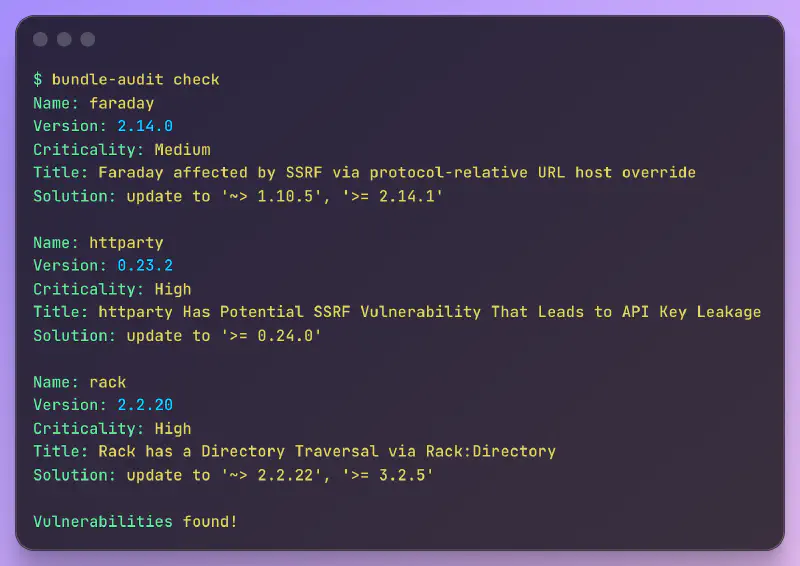
Rails 8 ships Propshaft by default, but migrating from Sprockets isn't always the right call. How to decide, and a step-by-step migration guide for when it is.

My Rails codebase audit process: stakeholder interviews before code, Gemfile and schema before any tools, and a single-page triage as the deliverable.
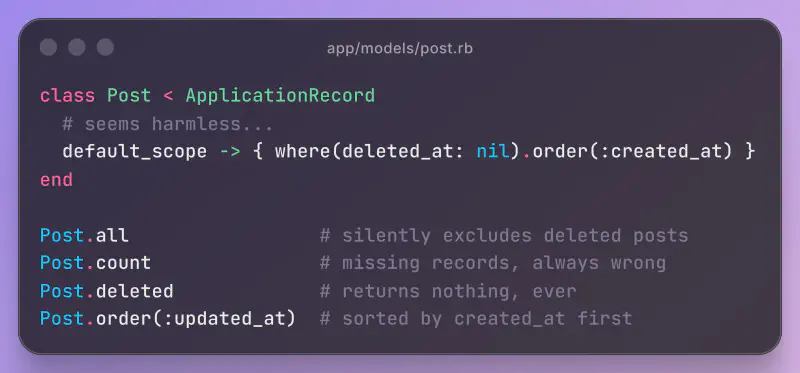
`default_scope` quietly breaks `Model.all`, corrupts scope chaining, bleeds into associations, and can leak data in multi-tenant apps. Here's why it's dangerous and what to use instead.
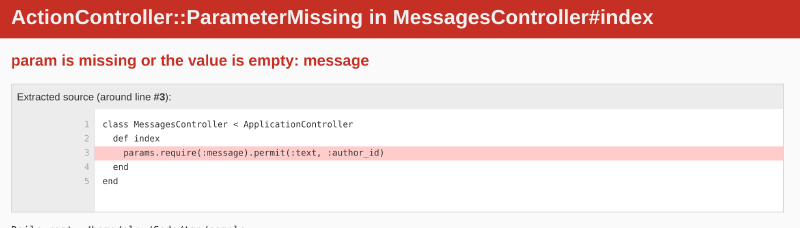
When using Ruby on Rails' strong_params with require, there is a chance the key doesn't exist. When this happens, an ActionController::ParameterMissing exception is thrown.
Ruby 2.7 deprecated the use of hashes in the last argument of a method call. Fix this warning by removing the curly braces or adding a hash splat (**) to a variable argument.

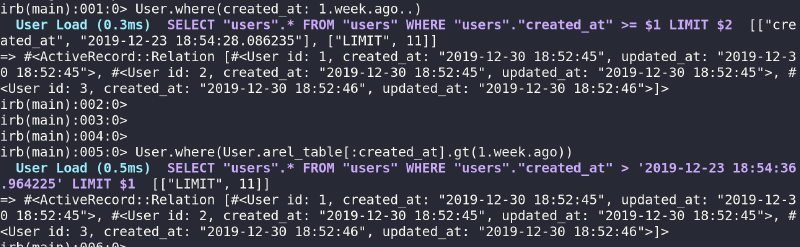
When querying ActiveRecord for greater than and less than, most people turn to including raw SQL in their codebase... But raw SQL isn't required!
When test suites contain a lot of duplication, coupling occurs at an individual spec basis. By utilizing core RSpec functionality, developers can clean up specs in order to reduce duplication and add clarity to the focal point of the spec.
